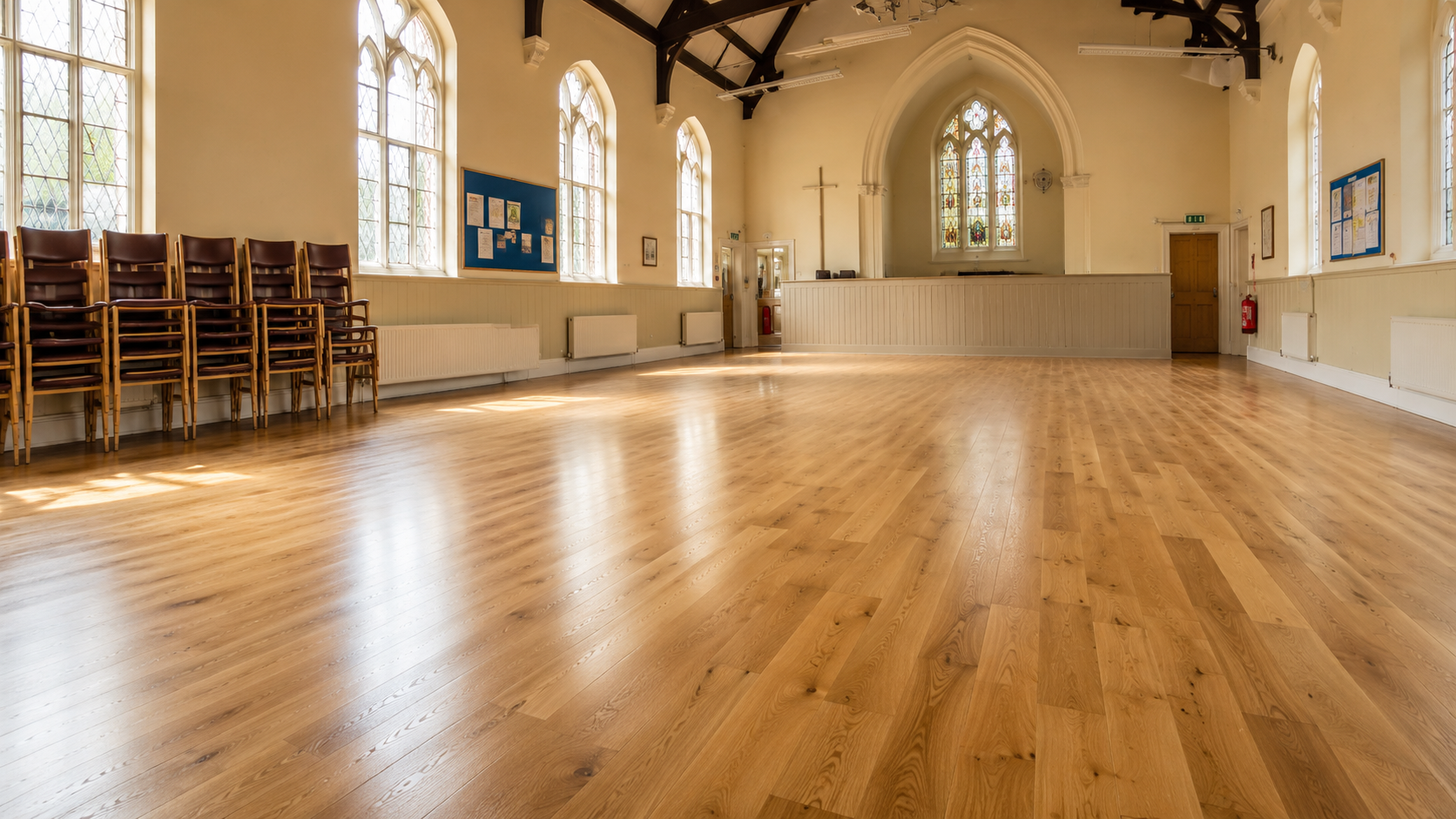
Rainham Floor Sanding – Churches, Halls & Clubs
Churches, community halls and social clubs across Rainham RM13 continue to play an important role in local life, hosting everything from worship services and community events to school activities and charity gatherings. Over time, constant foot traffic, furniture movement and ageing floor finishes can leave traditional timber floors looking worn, uneven and increasingly difficult to maintain. At Rainham Floor Sanding, we provide professional commercial wood floor restoration that helps preserve the character, safety and longevity of these valuable spaces.
Whether your building is close to Rainham Village, Rainham Hall, the A13 corridor, local churches, community centres or surrounding residential neighbourhoods, our experienced team delivers practical restoration solutions with minimal disruption. We provide expert Church floor sanding in Rainham, restoring heavily used timber floors with modern dust-controlled equipment, premium finishing systems and over 25 years of commercial restoration experience.
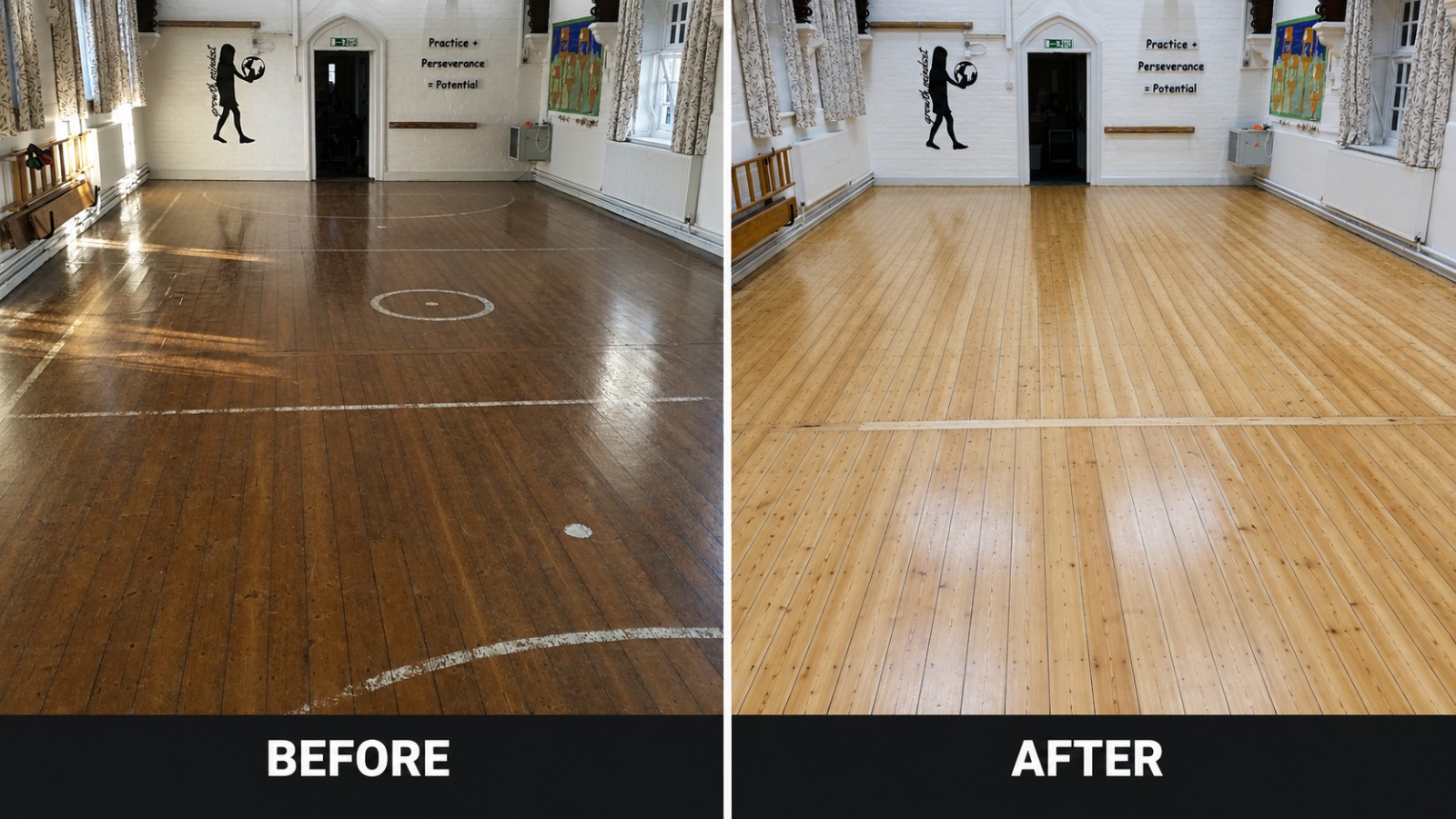
Commercial Timber Floor Restoration for Churches, Halls & Community Buildings
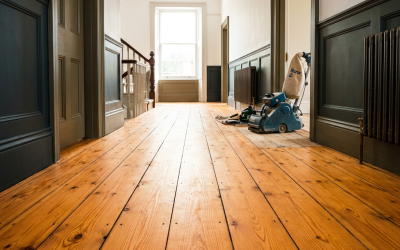
Many church halls and community buildings throughout Rainham contain beautiful timber floors that have served generations of visitors. Unfortunately, years of heavy use often result in scratched finishes, worn walkways, loose boards, gaps between floorboards, surface staining and uneven wear.
Rather than replacing an original timber floor, professional restoration can often return it to excellent condition while protecting its heritage character. Every project begins with a careful inspection so the correct restoration approach can be recommended according to the age, timber species, previous finishes and current condition.
Our Commercial Floor Restoration Process
1. Initial Assessment and Planning
Every project starts with a detailed survey of the existing floor.
- Timber species identification
- Moisture content testing
- Assessment of previous coatings
- Inspection for movement and structural defects
- Identification of damaged boards or loose parquet blocks
- Scheduling around church services, community events or hall bookings
Where appropriate, quotations can often be prepared from photographs, videos and accurate room measurements before arranging a site inspection.
2. Repairs, Board Replacement & Gap Filling
Successful floor restoration relies upon correcting underlying defects before sanding begins.
- Replacement of damaged timber boards
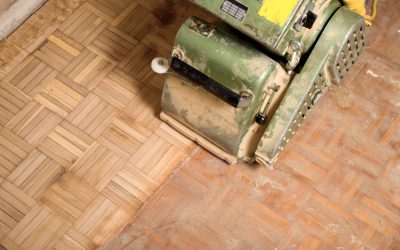
- Repairing loose parquet blocks
- Securing squeaking or moving floorboards
- Gap filling where appropriate
- Repairing previous poor-quality alterations
- Minor subfloor preparation where required
Our experienced team understands how older church floors behave and only recommends repairs that genuinely improve long-term performance.
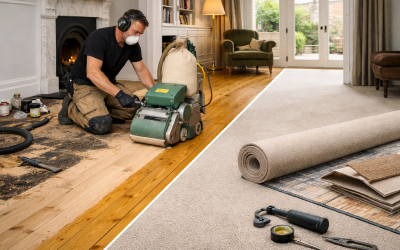
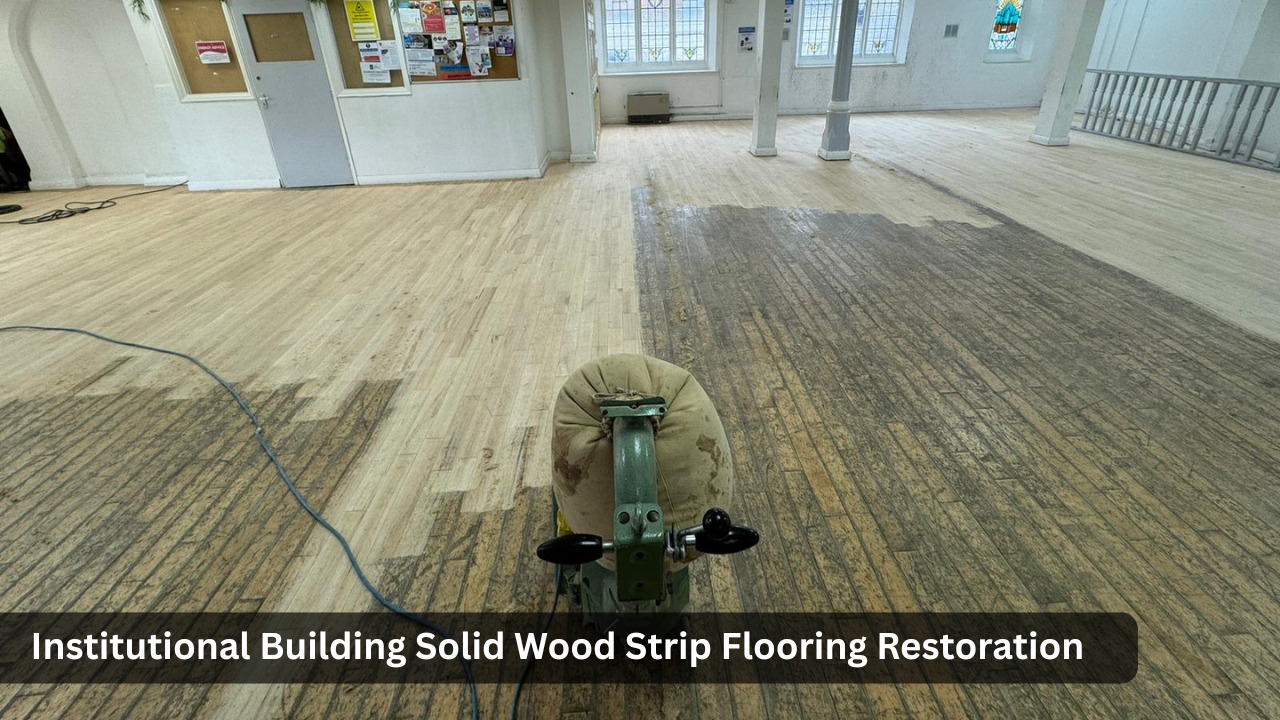
3. Dust-Controlled Sanding & Surface Preparation
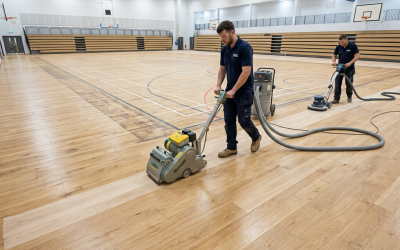
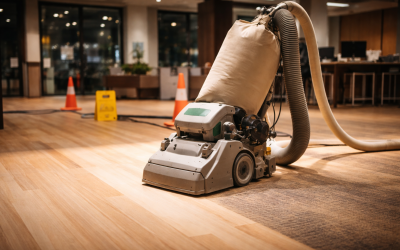
We use modern dust-controlled sanding systems that significantly reduce airborne dust while producing an exceptionally smooth surface ready for finishing.
Progressive sanding removes:
- Old varnish and paint
- Surface scratches
- Scuff marks
- Minor height differences
- Embedded dirt
- General wear from decades of use
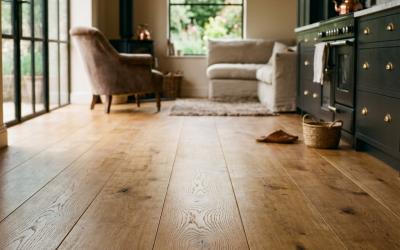
This stage also highlights the natural beauty of the timber while preparing it for professional finishing.
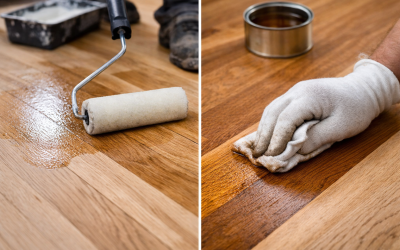
4. Professional Finishing Options
The correct finish depends upon how the building is used and the desired appearance.
Popular commercial options include:
- Commercial polyurethane lacquer
- Natural hardwax oils
- Penetrating oil finishes
- Heavy-duty two-component (2K) finishes
- Low-sheen heritage finishes
- High durability satin finishes
We regularly specify professional systems from trusted manufacturers including Bona, Loba, Osmo and Junckers, selecting products based on the building’s level of use rather than applying a one-size-fits-all solution.
5. Aftercare & Ongoing Maintenance
Long-term performance depends as much on maintenance as on the restoration itself.
We provide practical guidance covering:
- Daily cleaning methods
- Recommended maintenance products
- Protective furniture pads
- Entrance matting
- Future maintenance schedules
- Recoating intervals before heavy wear returns
Preventative maintenance can significantly extend the life of commercial floor finishes while reducing long-term refurbishment costs.
Experienced Church Floor Restoration Specialists
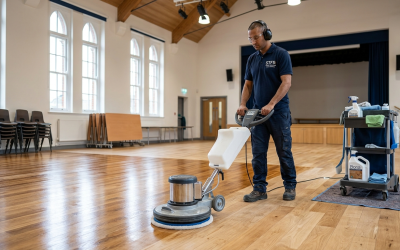
Churches require a careful approach that respects both the building and its ongoing activities. Our team has extensive experience working within heritage properties, active places of worship and busy community venues where cleanliness, safety and careful planning are essential.
We regularly carry out Church floor restoration in Rainham while coordinating projects around weddings, funerals, Sunday services, weekday groups and community events to minimise disruption.
Safe Working Practices
Commercial projects are planned carefully to maintain safe working environments throughout the restoration process. We use professional dust extraction systems, carefully manage access routes and schedule work to minimise inconvenience for building users.
Every recommendation is based upon the actual condition of the floor rather than unnecessary upselling, helping customers make informed decisions that represent good long-term value.
Flexible Scheduling for Busy Community Buildings
Many halls and churches cannot close during normal operating hours. We therefore offer flexible scheduling wherever possible, including school holidays, quieter periods, evenings or phased working programmes that reduce disruption while maintaining project efficiency.
Whether restoring a church hall, scout hall, sports pavilion or community centre, planning is tailored around your operational requirements.
Why Choose Our Commercial Floor Restoration Service?
- Over 25 years of commercial timber floor restoration experience
- Specialists in heritage and community buildings
- Modern dust-controlled sanding equipment
- Professional commercial-grade finishing systems
- Honest practical advice
- Clear quotations with no unnecessary work
- Flexible scheduling around building use
- Experienced workmanship from initial survey through to completion
Professional Advice Before Work Begins
Not every floor requires complete sanding. In some cases, localised repairs or maintenance recoating may provide a more cost-effective solution.
As an experienced Church floor sanding contractor in Rainham, we always explain the available options before work begins so clients can choose the most appropriate solution for their building and budget.
Frequently Asked Questions
1. How often should a church hall floor be professionally sanded?
The frequency depends on how heavily the floor is used. Most church halls and community buildings benefit from professional sanding every 10 to 20 years, although a maintenance recoat every few years can significantly extend the life of the finish.
2. Can you restore original timber floors instead of replacing them?
In many cases, yes. Original hardwood, pine floorboards and parquet flooring can often be restored through professional sanding, repairs and refinishing, making replacement unnecessary and preserving the building’s character.
3. Is the sanding process dusty?
Modern floor sanding equipment uses advanced dust extraction systems that capture the vast majority of sanding dust. While no process is completely dust-free, disruption is kept to a minimum and the work area remains much cleaner than with older sanding methods.
4. What types of buildings do you work in around Rainham?
We restore timber floors in churches, church halls, village halls, community centres, sports clubs, social clubs, schools, libraries and other commercial or public buildings throughout Rainham RM13 and the surrounding areas.
5. Can damaged floorboards or loose parquet blocks be repaired?
Yes. Before sanding begins, damaged boards, loose parquet blocks and other defects can be repaired or replaced where necessary. This creates a stable surface and helps achieve a better final finish.
6. Which finish is best for a busy church or community hall?
For buildings with high foot traffic, commercial-grade lacquers and two-component (2K) finishes are often recommended because they provide excellent durability. Hardwax oils may also be suitable where a more natural appearance is preferred. The best option depends on how the building is used.
7. Can work be carried out around church services and community events?
Absolutely. We understand that churches and community halls remain busy throughout the year. Wherever possible, work is scheduled around services, weddings, school holidays, evening activities and other bookings to minimise disruption.
8. How long does it take to restore a church hall floor?
The timescale varies depending on the size of the floor, the level of repairs required and the finish selected. Many medium-sized church halls can be completed within several days, although larger or more complex projects may require longer.
9. How can I get a quotation for my floor?
You can often receive an initial estimate by sending photographs, videos and approximate room measurements. For larger or more complex projects, a site visit may be arranged to assess the floor and provide an accurate quotation.
10. How can we keep our restored timber floor looking its best?
Regular cleaning using suitable wood floor products, entrance matting, furniture protectors and prompt attention to spills all help preserve the finish. Periodic maintenance coats before heavy wear develops can also extend the life of the floor and reduce future restoration costs.
Request a Free Commercial Floor Assessment
If your church, village hall, community centre or club in Rainham RM13 has a timber floor that is showing signs of wear, we’d be pleased to help.
Call 0800 335 7565 for friendly professional advice or visit https://rainhamfloorsanding.co.uk/ to request a quotation.
You can also send photographs, videos or approximate room measurements via WhatsApp or email for an initial assessment before arranging a convenient site visit where required.