| Key Takeaways |
|---|
| Regular maintenance prevents the need for costly full sand-and-seal projects. |
| Use pH-neutral cleaners specifically designed for wood to avoid stripping the finish. |
| ‘Screen and Recoat’ is a powerful mid-life maintenance technique to restore lustre. |
| Hardwax oils like Osmo require periodic ‘buffing’ with maintenance oils to stay fresh. |
The Problem: The Gradual Decline of a Beautiful Floor
After investing in a professional floor restoration, the most common concern for homeowners is how to keep that “just-finished” look. Whether it is a kitchen worktop, a garden decking, or an engineered oak floor in the lounge, the daily wear and tear of British life—from muddy boots to pet claws—can quickly take its toll. Without a proper aftercare regime, the protective layer of oil or lacquer begins to wear thin, leaving the timber vulnerable to stains, grain raising, and moisture ingress.
The Agitation: The Myth of the ‘Maintenance-Free’ Floor
Many retailers market engineered or solid wood floors as ‘maintenance-free’, but this is a dangerous misconception. Using generic supermarket floor cleaners can be disastrous; many contain harsh chemicals that break down the molecular bonds of water-based lacquers or emulsify the waxes in a hardwax oil finish. Once the finish is compromised, simple spills can lead to permanent water damage and unsightly ‘tannin pull’. If left too long, the only solution is another full, aggressive sanding project, which is both expensive and limits the lifespan of your floorboards.
The Solution: A Proactive Aftercare and Buffing Strategy
At Professional Floor Sanding Services UK, we believe that education is the final step of any successful restoration. By following a professional maintenance schedule, you can extend the life of your finish by decades.
The Science of Cleaning: pH Neutrality
The first rule of wood floor maintenance is to throw away the steam mop. Steam forces moisture deep into the wood grain, causing the timber to expand and potentially pop the finish. Instead, use a microfibre mop and a pH-neutral cleaner like Bona Wood Floor Cleaner or Osmo Wash and Care. These products are designed to lift dirt without leaving a dulling residue or attacking the protective surface. For areas with high humidity, such as kitchens, ensure that spills are wiped up immediately to prevent the moisture content from rising and causing the timber to cup.
Screen and Recoat: The Professional Secret
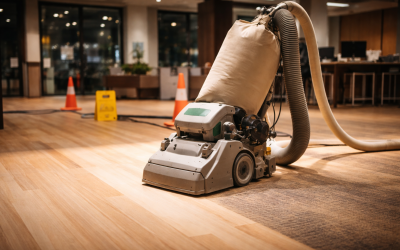
If your lacquered floor is starting to look a little tired but hasn’t worn through to the bare wood, a ‘Screen and Recoat’ is the perfect middle-ground. We use a Bona Flexisand with a fine mesh screen (usually 120 or 150-grit) to lightly key the existing surface. We then apply a fresh coat of Bona Traffic HD. This restores the slip resistance and aesthetic without the need for an aggressive sand. This technique is equally effective for commercial spaces like restaurants and shops where downtime must be kept to a minimum.
Oiling and Buffing for Long-Term Beauty
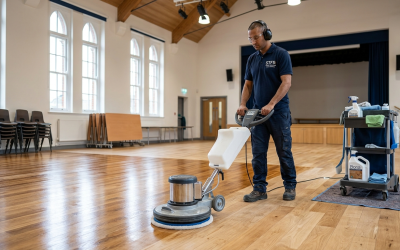
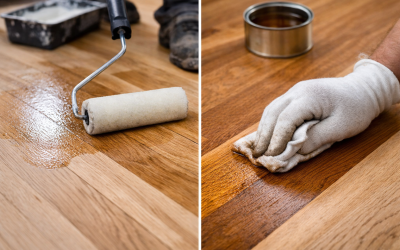
For floors finished with Osmo Polyx-Oil or Blanchon, maintenance is even simpler. These finishes can be locally repaired. If a high-traffic area begins to look dull, it can be rejuvenated with a thin application of maintenance oil and a buffing machine. A Pro-Tip for professionals and homeowners alike: always apply maintenance products in the direction of the grain to avoid streaks. For more technical details on the initial application process, refer back to our guide on Victorian pine restoration or our analysis of commercial sports hall standards.
Preserving a wood floor is about consistency. By using the right tradesmen-recommended products and understanding the specific needs of your timber, you ensure that your home remains a showcase of British heritage. For detailed product specifications, the Osmo official website provides excellent resources on the curing times and application of their hardwax range.