A Business Owner’s Guide to Commercial Overnight Floor Sanding in Rainham
If you run a busy shop, office, studio, clinic, showroom, or customer-facing venue, closing for floor restoration can feel like lost revenue. The good news is that professional floor sanding in Rainham does not always need to disrupt normal trading for days on end. With proper planning, dust-controlled machinery, phased working, and the right finishing system, many commercial timber floors can be restored overnight or across carefully managed out-of-hours windows.
For Rainham business owners, the key is not simply sanding the floor quickly. It is about choosing a restoration plan that protects your brand image, keeps staff and customers safe, and gets the surface back into service without cutting corners. If you are comparing options, our Rainham floor sanding specialists can assess the timber, the traffic level, and the reopening deadline before recommending the most practical route forward.
Why overnight floor sanding matters for commercial premises
Downtime costs money. In retail, it can mean missed footfall and interrupted merchandising. In offices, it can mean displaced teams, reduced productivity, and complaints about noise or access. In hospitality or wellness spaces, even a short closure can affect bookings and repeat business. That is why overnight floor sanding has become such a practical option for commercial timber floors in active business environments.
Overnight scheduling works especially well where the existing floor is structurally sound but cosmetically worn. Scratches, dull traffic lanes, old coatings, black heel marks, shallow surface damage, and uneven sheen can often be dealt with more efficiently than full replacement. Replacing a wood floor usually creates far more disruption than restoring it, especially when subfloor work, disposal, and refitting are involved.
As covered in our Commercial Floor Sanding in Rainham guide, a professionally restored commercial floor is easier to clean, looks sharper to customers, and can usually be returned to use far faster than many owners expect.
Which businesses are best suited to overnight sanding?
Not every premises needs the same programme, but overnight floor sanding is particularly useful for:
- Retail shops and showrooms
- Offices and reception areas
- Studios and creative workspaces
- Clinics, salons, and treatment rooms
- Pubs, cafés, and restaurants with timber floors
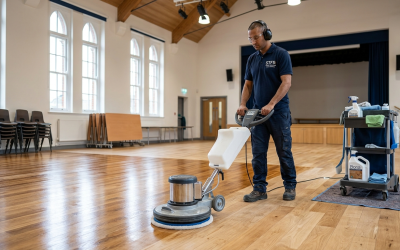
- Schools, halls, and community spaces with limited daytime access
It is most effective on solid wood floors, parquet, and some engineered boards with a suitable wear layer. Laminate cannot be sanded in the same way, and heavily water-damaged or structurally unsound timber may need more extensive restoration first.
What makes a commercial overnight sanding project succeed?
1. Proper site assessment before any machine starts
The biggest mistake in commercial floor restoration is assuming every venue can be treated the same way. A shop floor with shelving and stock control issues is not the same as an open-plan office with chair traffic and cable routes. The site visit should identify:
- Floor type and thickness
- Existing finish type
- Loose boards, movement, squeaks, or minor repairs
- Access restrictions and alarm arrangements
- Noise-sensitive periods
- Furniture, stock, or equipment removal requirements
- Drying and curing windows before reopening
On the Rainham site’s prices page, it is clear that project cost depends on the floor condition, preparation time, finish selection, and the scope of repairs. That is exactly why an overnight job must be planned in detail rather than treated as a rushed cosmetic fix.
2. Dust-controlled sanding, not old-fashioned mess
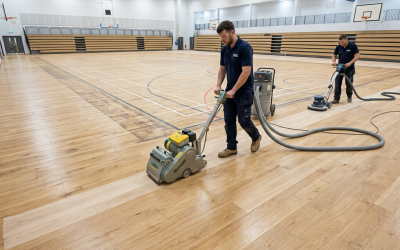
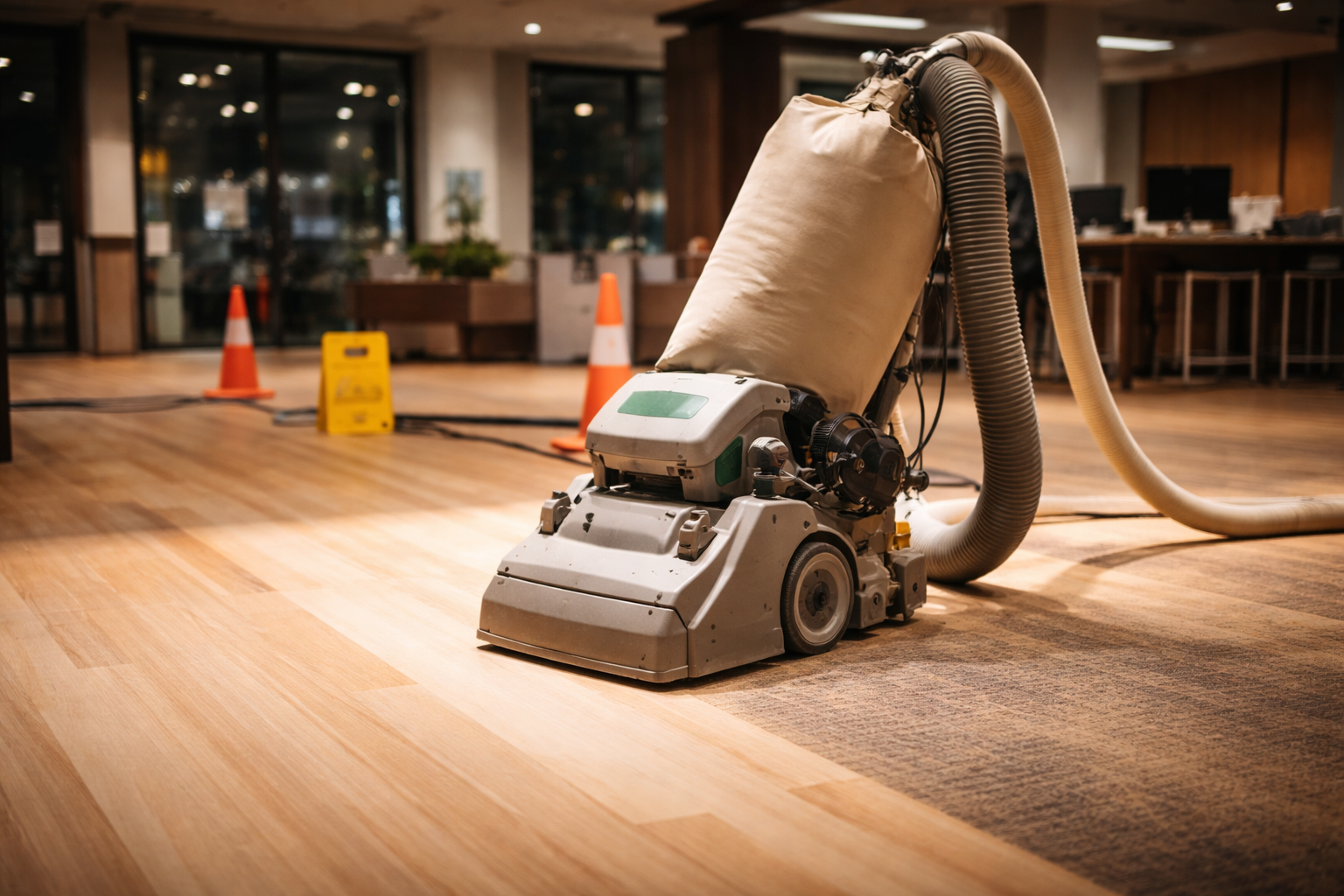
Modern commercial sanding should use high-grade dust extraction to keep airborne dust to a minimum. That matters in offices with IT equipment, retail spaces with fitted displays, and any environment where cleanliness affects operations the next morning. Dust control also reduces post-job cleanup time, which is one of the hidden reasons some overnight projects run over schedule.
If you want a general overview of the restoration side of the process, our Wood Floor Sanding in Rainham article explains how professional sanding removes worn coatings, revives tired boards, and prepares timber properly for a fresh finish.
3. Repair work kept realistic
Overnight sanding works best when repairs are modest and pre-agreed. Re-securing a few loose boards, replacing isolated damaged sections, removing old gripper rods, or filling minor surface defects can usually be built into the plan. Larger subfloor instability, extensive board replacement, damp-related failure, or widespread movement may require a staged programme rather than a single overnight visit.
4. Correct grit sequence and finish prep
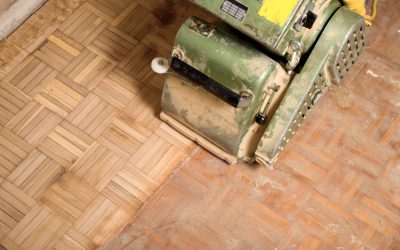
Commercial sanding is not one aggressive pass with a machine. A professional sequence removes the old coating, evens the surface, refines the scratch pattern, and creates the right base for a high-performance finish. On worn business floors, this matters because poor prep often causes the real failure later: patchy appearance, poor adhesion, rough texture, or early wear in traffic lanes.
Choosing a finish that supports fast reopening
The finish is where commercial downtime is won or lost. Business owners often focus on sanding speed, but drying and curing are what determine when the floor can safely take foot traffic, furniture, chair wheels, or trading activity again.
Commercial lacquer systems
For many offices, shops, corridors, and reception areas, a high-performance lacquer is the most practical choice. Bona states that Bona Traffic HD is a two-component waterborne finish designed for high durability and that it reaches full cure in 3 days, while also offering strong scratch, scuff, and chemical resistance. That makes this kind of system highly relevant where business owners need a hard-wearing commercial coating and a clear reopening plan.
In practice, lacquer systems are often preferred for:
- Offices with chair wheels and repeated foot traffic
- Retail spaces needing a clean, sealed, easy-to-maintain finish
- Public areas where routine cleaning is essential
- Venues where a consistent matt or satin look suits the brand
Hardwax oil systems
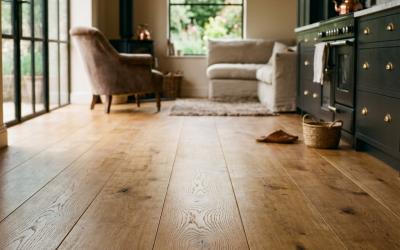
Where a warmer, more natural appearance matters, hardwax oil can be an excellent choice. Osmo says Polyx-Oil Original is highly durable, water- and dirt-resistant, abrasion-resistant, and microporous, which is why it remains popular in premium commercial interiors where a natural timber character is part of the design.
Hardwax oil is often a strong option for boutique retail, studios, design-led offices, and hospitality settings where a more natural feel is preferred. It can also be useful where localised maintenance is a consideration, though the best choice still depends on traffic levels, cleaning routines, and the reopening deadline.
Why drying is not the same as full cure
A floor can feel dry long before it reaches full hardness. That distinction is critical in commercial settings. Light foot traffic may be possible earlier than heavy use, but heavy furniture, shelving, castor chairs, or cleaning equipment returned too soon can mark the finish before it has properly cured. Bona’s current Traffic HD data sheet explicitly distinguishes high performance from full cure timing, which is why reopening schedules should always be discussed as part of the job plan.
How overnight floor sanding is usually phased
For many retail and office premises, the smartest approach is not a single all-or-nothing shutdown. It is a phased plan that keeps the business operational while the floor is restored in controlled sections.
Zone-by-zone sanding
In larger premises, dividing the floor into sections can allow one area to remain functional while another is being treated. This is common in:
- Open-plan offices
- Showrooms
- Reception and corridor combinations
- Multi-room commercial units
Weekend and overnight combination
Some jobs are best started after close of business, then completed with a protected drying window into the following day or weekend. This is often the safest method where the finish needs more time before normal commercial traffic resumes.
Pre-move and post-return scheduling
Furniture movement can easily become the part that delays the whole project. A professional commercial plan should define exactly when desks, shelving, stock stands, and loose fittings are removed and when they are allowed back. This prevents the classic mistake of finishing on time but losing the reopening window because the room cannot yet be safely reoccupied.
What business owners should do before the sanding team arrives
- Confirm exactly which areas are being treated
- Photograph the room layout for easy reset
- Remove loose stock, floor displays, rugs, and portable electronics
- Arrange secure storage for valuable or fragile items
- Notify staff about access restrictions
- Check alarm, keys, entry, and emergency contact arrangements
- Discuss ventilation and overnight locking procedures
It also helps to agree the finish sheen in advance. Small decisions made late in the evening often create delays. A matt commercial lacquer, a satin finish, or a natural hardwax oil look should be signed off before the work starts, not while the floor is mid-process.
Managing moisture, temperature, and long-term performance
Commercial owners often think only about appearance, but timber performance is tied to the internal environment. NWFA guidance notes that wood floors perform best when interior conditions are controlled, with a commonly cited relative humidity range of 30% to 50% and temperatures around 60°F to 80°F. While UK buildings vary, the principle remains highly relevant: stable indoor conditions help reduce movement, finish stress, and seasonal problems.
That matters in heated offices, air-conditioned retail units, and buildings with sudden overnight temperature drops. A good sanding job can still be undermined by poor environmental control, especially if the timber was already moving before restoration.
Signs your business floor is a good candidate for overnight restoration
- The floor is dull, scratched, or patchy but still structurally sound
- The finish has worn through in walkways and entrances
- The timber still feels solid underfoot
- You want a cleaner, more professional look without full replacement
- You need a scheduled solution around trading hours
If the floor shows black water staining, widespread movement, rotten sections, or serious subfloor issues, a longer restoration programme may be more realistic. The correct answer is not always “faster”; it is the plan that protects the floor and avoids repeat disruption later.
Do not forget exterior timber if first impressions matter
Some commercial premises also have external customer-facing timber, such as entrance decking or transitional boardwalk areas. These need a different specification from interior office or retail floors, especially where slip resistance and weather exposure are involved. For outdoor surfaces, see our Deck Sanding in Rainham guide, which focuses on non-slip, weather-ready exterior boards.
Why professional planning always beats a rushed cheap job
Business owners are right to focus on downtime, but the cheapest quote is rarely the one that protects trading continuity. A rushed sanding job that reopens too early, uses the wrong finish, or skips preparation can leave you with premature wear, visible defects, and a second closure later. That is more expensive than doing the work properly once.
The strongest commercial outcomes usually come from a contractor who understands access logistics, dust control, drying windows, and durable finish selection, not just sanding alone. That is especially true in customer-facing Rainham premises where the floor contributes to the overall impression of quality and professionalism.
Final thought: overnight sanding is about planning, not speed alone
Overnight floor sanding can be an excellent solution for retail units and offices in Rainham, but only when the schedule, preparation, repairs, finish system, and return-to-service plan are all aligned. Done properly, it can restore a tired timber floor with far less disruption than replacement, while giving your business a cleaner, stronger, more polished environment by the next trading window.
If you want tailored advice for your premises, from phased works to finish selection and realistic reopening times, contact Rainham Floor Sanding or request a quote through the callback page. For business owners balancing appearance, durability, and trading continuity, that first assessment is where the smart decision starts.