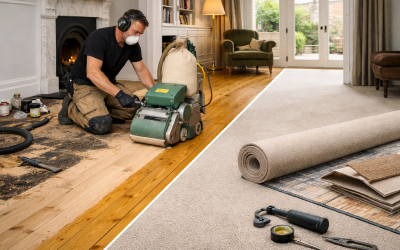
Commercial Floor Sanding in Rainham RM13
Commercial floor sanding in Rainham RM13 requires more than taking a machine across worn timber and applying another coat of lacquer. In busy offices, shops, restaurants, schools and industrial premises, failed floor seals allow dirt, moisture and cleaning chemicals into the wood. Once the protective coating breaks down, exposed boards become harder to clean, increasingly uneven underfoot and more expensive to repair.
Rainham Floor Sanding provides timber floor sanding, repairs and refinishing for commercial properties throughout Rainham RM13. Whether you manage a retail unit on Broadway, offices near Rainham railway station or operational premises around Ferry Lane and the A13 industrial corridor, the work needs to be planned around access, equipment movements, staff safety and the time available before the building reopens.
Our approach to Commercial Floor Restoration in Rainham starts with identifying what has caused the deterioration, rather than simply covering it up. We can assess requirements for Commercial Floor maintenance in Rainham and Commercial Floor Polishing in Rainham, including whether the existing finish can be maintained or the timber needs sanding back to a sound surface.
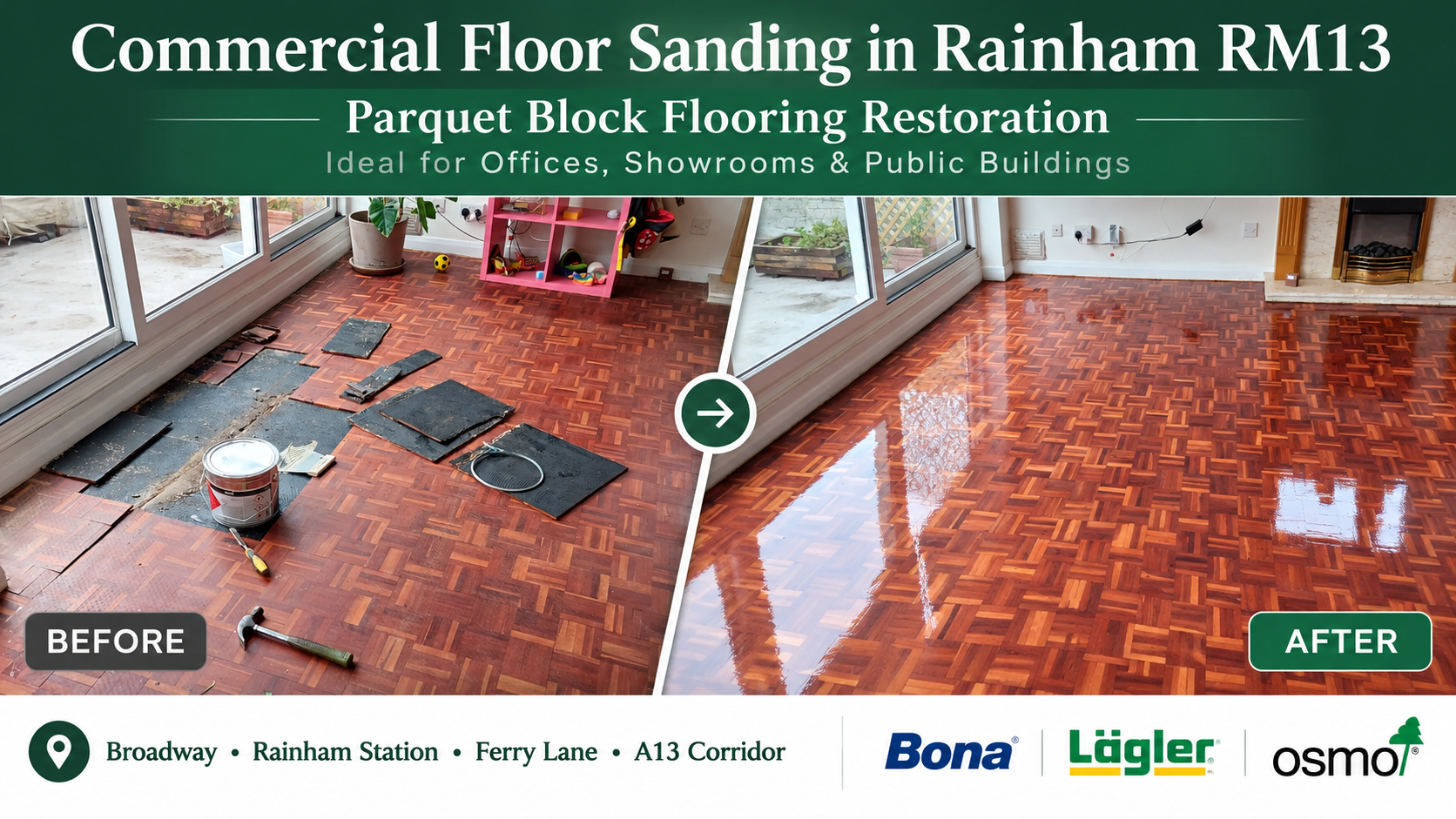
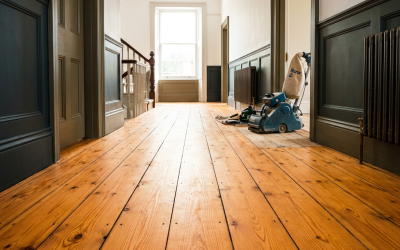
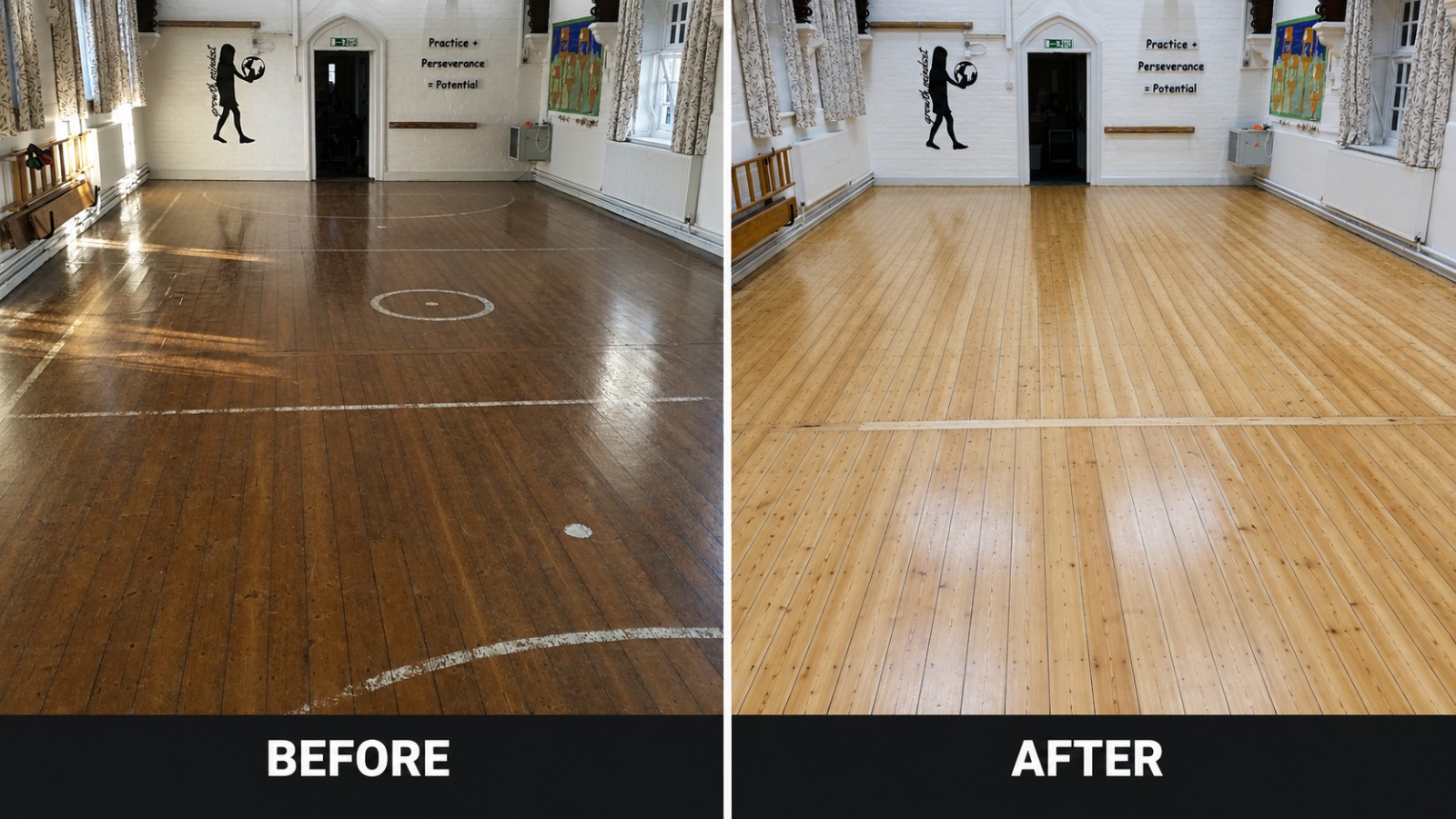
Before and after parquet flooring restoration, highlighting damaged block repairs and a beautifully refinished wooden floor. Rainham Floor Sanding provides commercial timber floor sanding, repairs and restoration across Rainham RM13, including Broadway, Ferry Lane and the A13 corridor.
Commercial Timber Floor Wear: What We Find Across Rainham RM13
Rainham has a mixture of older village properties, converted premises, community buildings and modern commercial units. Around the Rainham Conservation Area, particularly Broadway, Upminster Road South and Bridge Road, historic buildings can present uneven boards, older joist construction and multiple generations of floor finishes. These need a different approach from the concrete-based units and newer commercial buildings found towards Ferry Lane and the A13.
Older Victorian conversions and Edwardian institutional buildings may contain pitch pine boards or traditional parquet, while more recent office and retail interiors often use engineered oak or modern block flooring. Some older installations also contain hardwoods such as teak. Identifying the species and construction matters because timber hardness, residual finish, adhesive condition and available sanding depth determine how the floor should be restored.
A domestic sanding specification is rarely sufficient for a commercial floor receiving continuous foot traffic, wheeled equipment or repeated cleaning. Likewise, an off-the-shelf polish will not repair fractured lacquer, loose parquet or moisture damage beneath the surface. Applying another product over a contaminated coating can make adhesion problems worse.
Common Structural and Safety Problems
- Open board joints: Gaps between floorboards collect grit, food debris and cleaning residues, creating hygiene problems in cafés, treatment rooms and educational buildings.
- Loose parquet blocks: Failed adhesives allow blocks to rock underfoot, particularly around doorways, reception desks and heavily travelled routes.
- Worn protective coatings: Once bare timber is exposed, repeated wet cleaning can cause staining, raised grain and localised swelling.
- Slippery or inconsistent surfaces: Incorrect polishing products, greasy deposits or an unsuitable finish can increase slip risk, especially near entrances and catering areas.
- Moisture ingress: Water entering through joints or rising from an unsuitable subfloor can damage adhesives, distort boards and cause lacquer failure.
- Mechanical wear: Castor chairs, stock trolleys, delivery cages, gym equipment and concentrated furniture loads can damage timber beyond the depth of ordinary surface scratches.
- Previous poor sanding: Uneven drum marks, excessive edge sanding and raised fixings may leave insufficient timber for another aggressive sanding cycle.
The objective is not simply to make the floor look newly installed. It is to return the existing timber to a sound, cleanable and fit-for-purpose condition without removing more material than necessary.
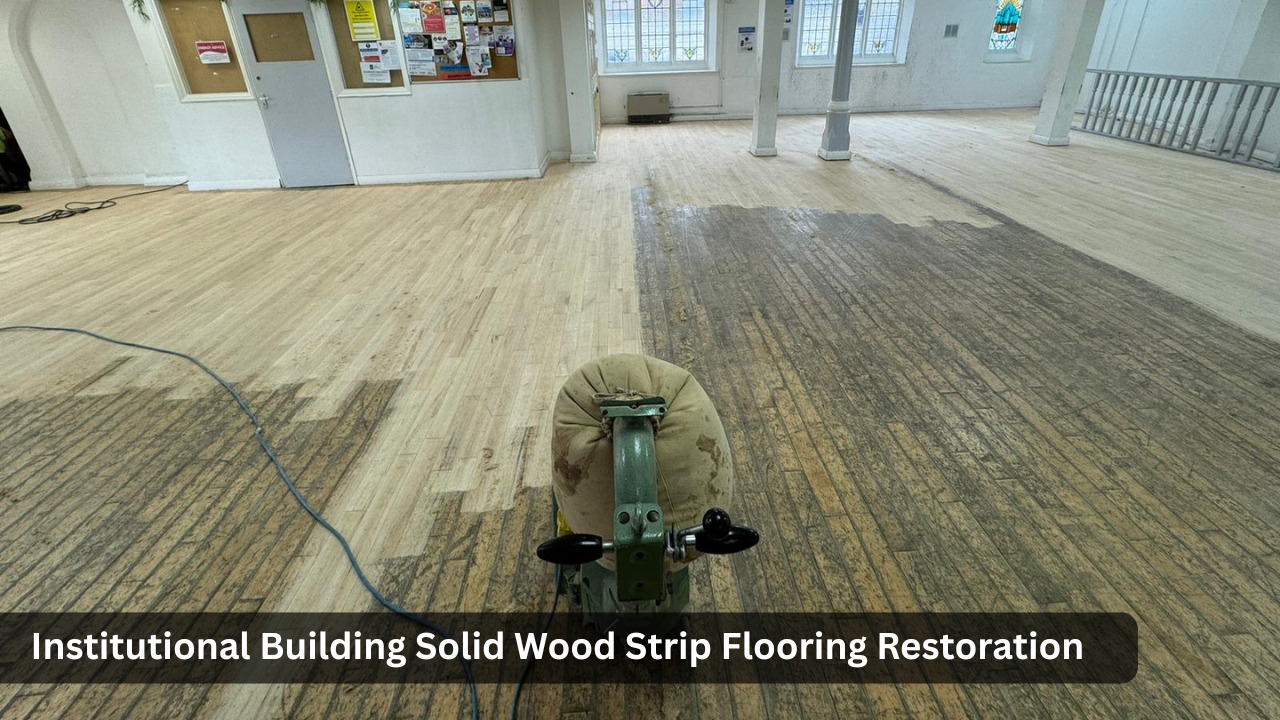
Commercial Floor Sanding for Rainham Businesses and Public Buildings
Offices, Coworking Spaces and Serviced Offices
Office timber floors normally suffer most around entrances, meeting rooms, chair positions and main circulation routes. Castors can wear through a lacquer film surprisingly quickly when grit is trapped underneath them. Restoration specifications should account for chair movement, furniture relocation, cable floor boxes and phased access to occupied departments.
Shops, Boutiques, Showrooms and Shopping-Centre Units
Retail floors need to withstand concentrated footfall, entrance moisture and constant movement of display furniture. We assess the condition of the coating along customer routes and around counters before recommending full sanding or localised repairs. Work can be planned outside trading hours, subject to building management approval and the selected finish’s curing requirements.
Restaurants, Cafés, Pubs and Takeaway Premises
Food-service flooring presents a different set of problems: grease, spilt drinks, chair movement and frequent cleaning. Kitchen-grade chemicals can attack unsuitable floor finishes, particularly where protective seals have already failed. Dining areas and front-of-house timber must be assessed for coating compatibility, cleanability and slip resistance, with non-timber commercial safety flooring generally more appropriate in wet food-preparation zones.
Factories, Workshops and Manufacturing Units
Workshop timber may be exposed to impact, dragged equipment, oils and concentrated machinery loads. Before sanding, we check for embedded metal, protruding fixings, contaminated boards and movement within the supporting structure. Where heavy industrial loading or chemical exposure exceeds what a timber finish can reasonably tolerate, we will not recommend lacquer as a substitute for a suitable industrial flooring system.
Storage Units, Distribution Centres and Delivery Depots
Timber-floored offices, dispatch rooms, mezzanine areas and older warehouse interiors can develop pronounced wear along trolley routes. Repairing split boards and unstable joints is essential before mechanical sanding. Loading-bay access, stock movement and exclusion zones need to be agreed so restoration does not interfere with active deliveries.
Gyms, Cinemas, Event Venues and Studios
Exercise and event spaces require particular attention to friction, impact resistance and cleaning routines. A sprung timber sports floor must be assessed as a complete system, not treated like an ordinary office floor. Where sports performance is required, the finishing specification must take account of BS EN 14904 and the relevant sports-floor manufacturer’s requirements.
Hotels, Hostels and Serviced Accommodation
Reception areas, lounges, corridors and function rooms often need sectional restoration to preserve guest access. Night work is not automatically suitable in accommodation buildings because sanding machinery produces considerable noise even with efficient extraction. We plan noisy operations around permitted working hours and reserve quieter finishing stages for suitable out-of-hours periods.
Clinics, Dental Practices and Treatment Rooms
Clinical premises require strict control of dust, odours and access to patient areas. Even efficient sanding extraction does not remove the need for segregation, ventilation and cleaning before reoccupation. Suitable low-emission coatings can be considered where timber is permitted, but clinical infection-control and cleanability requirements take priority over appearance.
Schools, Colleges, Universities and Academies
Classrooms, assembly halls, libraries and corridors often contain timber that has survived decades of use. Loose parquet, exposed nails and worn lacquer require careful attention before pupils or staff return. Half-term, summer holiday and weekend programmes are generally more practical than trying to restore a heavily used corridor during the school day.
Churches, Mosques, Temples and Community Buildings
Places of worship and community venues often combine historic timber with demanding patterns of use. Fixed pews, thresholds, delicate joinery and large uninterrupted floors each introduce different restoration considerations. Scheduling must respect worship, prayer, community activities and other booked events, particularly where the floor cannot be closed for an extended period.
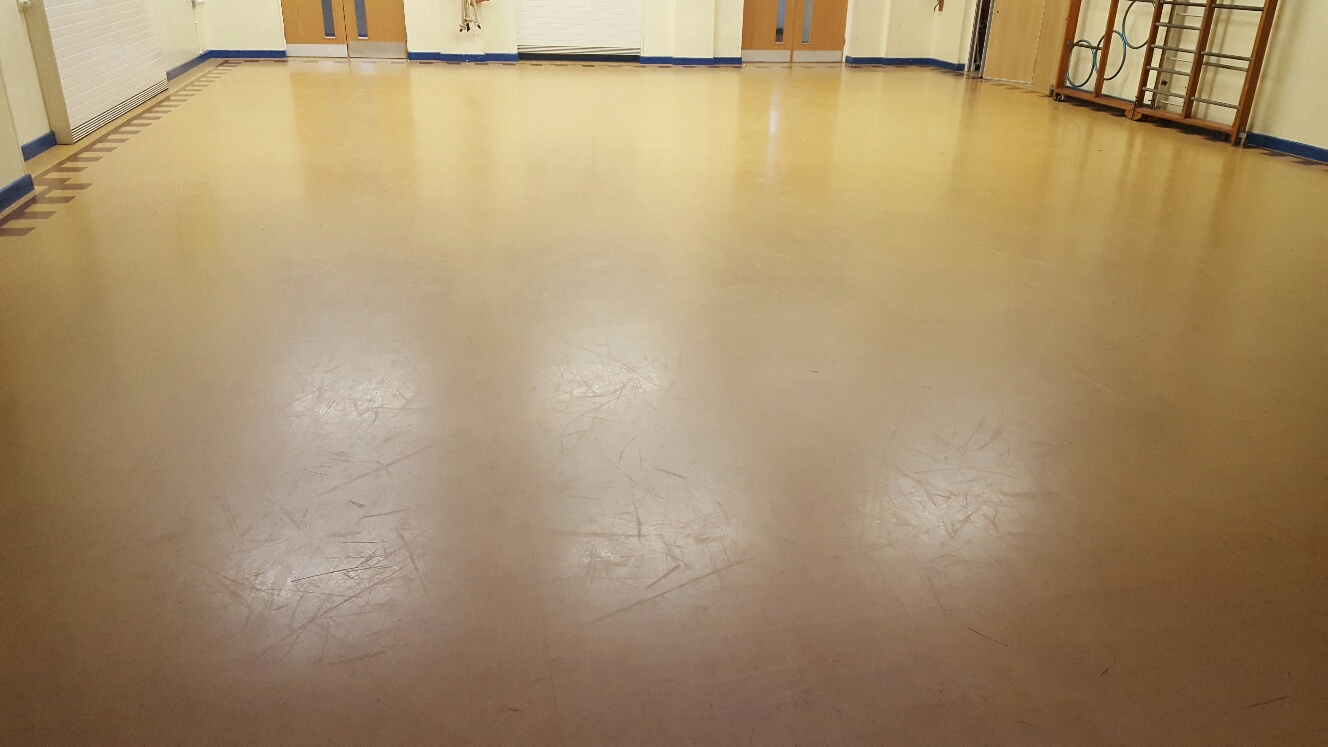
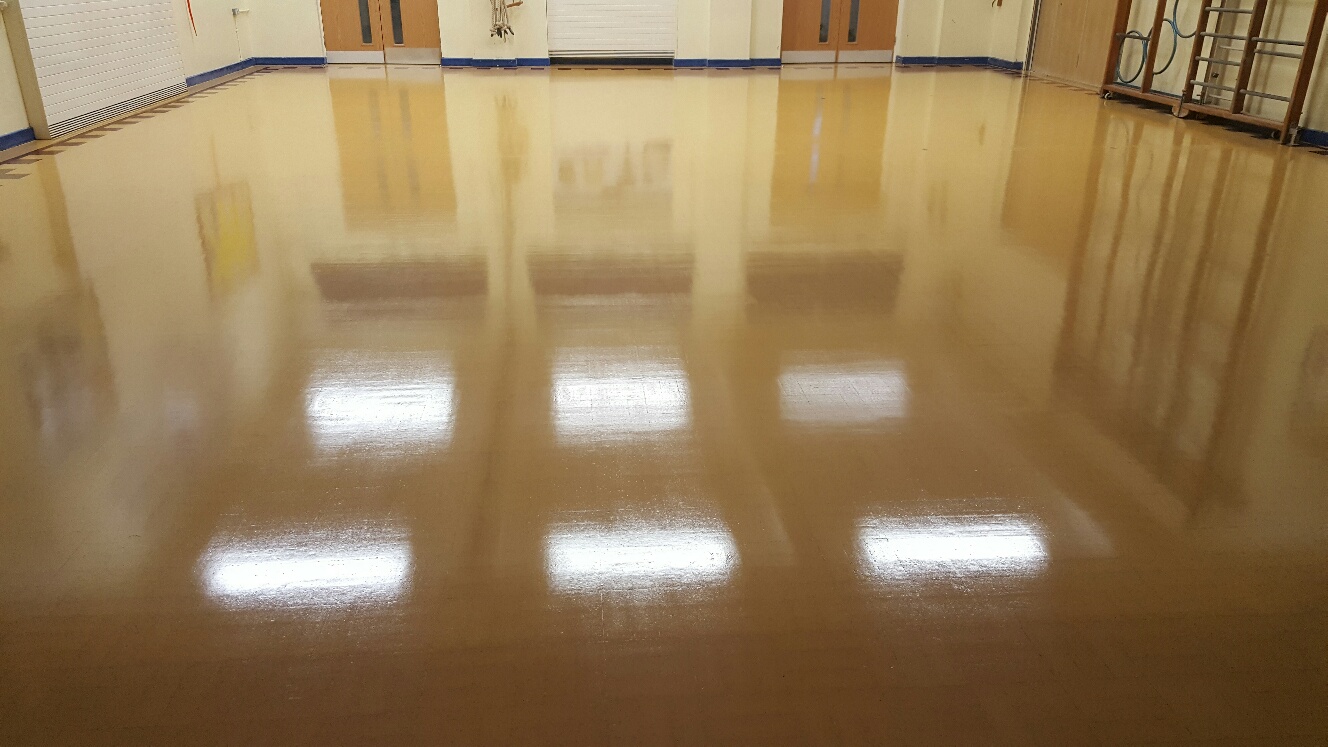
Our Five-Step Commercial Timber Floor Restoration Process
Step 1: Subfloor Audit, Timber Identification and Moisture Testing
Before a sanding machine is brought onto site, the existing floor needs checking. We examine board thickness, parquet stability, movement, old coatings, exposed fixings and the condition of thresholds. Particular care is required with engineered timber because the usable wear layer may be too thin for conventional sanding.
For moisture-sensitive installations, checks may include timber moisture-meter readings and appropriate subfloor testing, including in-situ hygrometer measurements of relative humidity where required by the flooring or adhesive specification. A damp concrete base cannot be made suitable simply by applying a stronger adhesive or additional lacquer. The moisture source must be investigated and resolved before re-bonding or refinishing proceeds.
Timber identification is equally important. Quartersawn oak, old pitch pine and teak differ in hardness, resin content, natural oils and finishing behaviour. Coating compatibility and the sanding sequence should be established accordingly, with sample areas where necessary.
Step 2: Timber Repairs, Re-bonding and Resin Gap-Filling
There is little value in sanding a parquet floor while its blocks are moving. Loose sections are lifted where necessary, old adhesive is removed and the substrate is checked before reinstallation. Depending on the original construction and site conditions, a suitable silane-based flexible parquet adhesive may be specified to provide a resilient bond while accommodating normal timber movement.
Split boards and badly damaged sections may need replacement using correctly sized timber matched as closely as practical for species, grain and thickness. On older floors, reclaimed boards can sometimes be preferable to new material. Repairs must be structurally sound before any cosmetic filling is attempted.
Fine, stable joints can be treated with a compatible resin-slurry gap-filling system using clean sanding dust from the floor. Wider gaps may require timber slivers or other purpose-designed repairs rather than excessive quantities of filler. Where boards are subject to seasonal movement, rigidly filling every joint can lead to cracking or filler displacement.
Step 3: HEPA Dust-Controlled Sanding and Surface Preparation
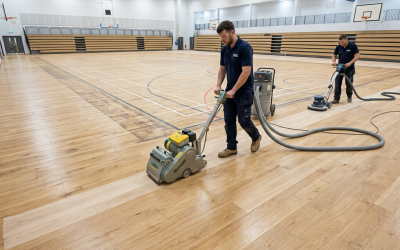
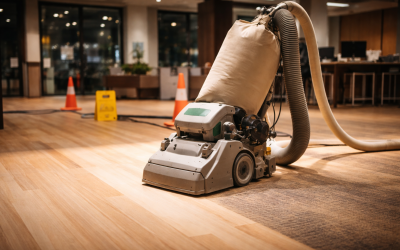
For large timber floors, the Lägler Hummel belt sander is a recognised professional machine capable of producing a consistent cut when operated correctly. Edge sanding, corners and areas around fixed fittings require separate machines and hand finishing. The abrasive sequence is selected according to timber condition and the existing coating, rather than relying on one coarse grit across the entire floor.
Dust control is particularly important in operational premises. Suitable source extraction and industrial vacuum equipment, including HEPA H14 filtration where specified by the site risk assessment, help control fine airborne particles. H14 filtration should be verified as part of a properly maintained extraction system; the filter classification alone does not make an uncontrolled work area safe.
Our preferred site specification includes room segregation, protected air routes, sealed access points where appropriate and thorough vacuum cleaning between sanding stages. Machines must be kept away from occupied workspaces unless an agreed safe system of work permits otherwise. We do not describe sanding as completely dust-free, because mechanical removal of timber always creates dust at source.
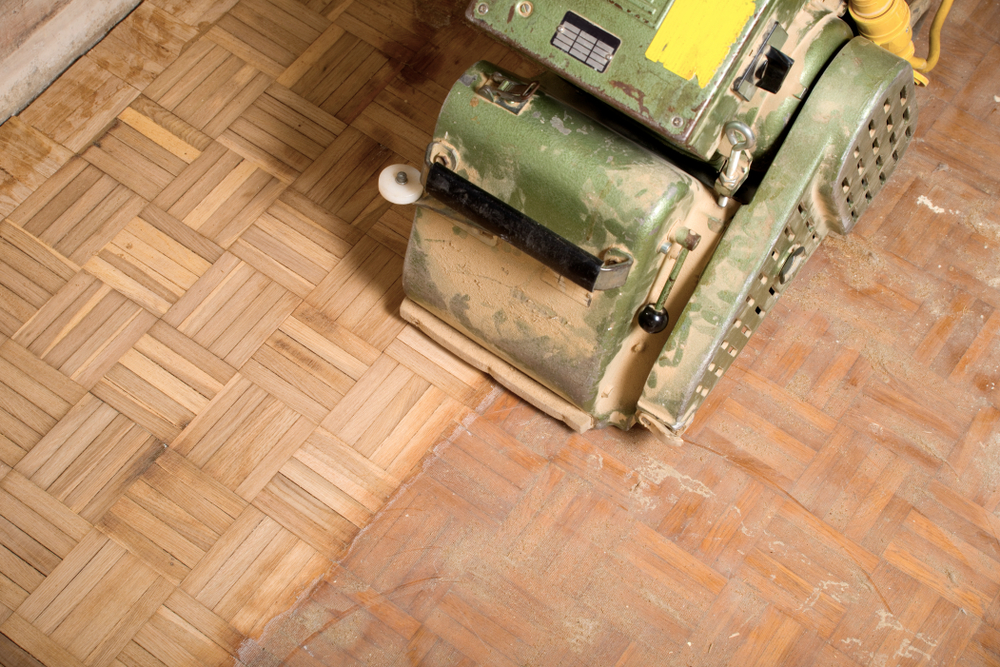
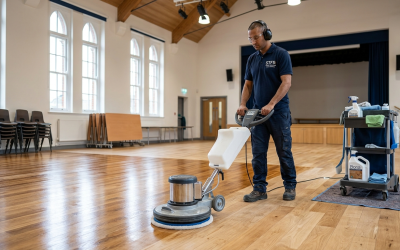
Professional parquet floor sanding in Rainham RM13, removing worn finishes and preparing commercial wooden floors for a smooth, durable restoration.
Step 4: High-Traffic Lacquers, Hardwax Oils and Slip-Resistant Finishes
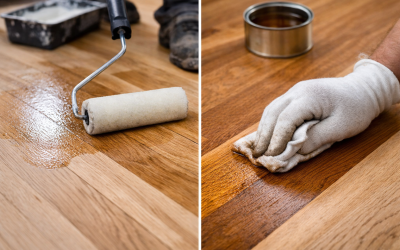
Choosing the finish is one of the most important commercial decisions. Offices, retail premises and public corridors often benefit from a properly specified 2K waterborne polyurethane lacquer, which combines a water-based component with a measured cross-linking catalyst or hardener. The resulting cured coating can offer strong abrasion and chemical resistance when prepared and applied in accordance with the manufacturer’s technical data sheet.
The catalyst ratio, pot life, application rate, intercoat interval and environmental conditions must be respected. Too much hardener does not produce a better floor, and applying subsequent coats outside the permitted window can create adhesion problems. Humidity, temperature and ventilation can all affect drying and final cure.
Commercial-grade hardwax oils are another option where local repairability and a natural appearance are priorities. They generally require a different maintenance regime from lacquer and are not automatically suitable for the heaviest traffic or chemical exposure. The final selection depends on how the space is used, how it is cleaned and how frequently maintenance can be arranged.
In entrances, event venues and other areas where slipping is a concern, a compatible slip-resistant coating or approved additive may be appropriate. BS 7976-2 pendulum slip-resistance testing is a recognised reference for assessing floor slipperiness, although testing should use the applicable current methodology and site conditions. A specific pendulum test value cannot be guaranteed merely by naming a lacquer or adding an anti-slip product.
Where low-emission products are required, finishes and adhesives with independently documented emission credentials should be selected. EC1 Plus is an EMICODE very-low-emission classification, and the rating should be checked against the exact product proposed rather than assumed to apply to all waterborne coatings.
When Can the Floor Be Used Again?
A coating being touch-dry is not the same as being fully cured. Some fast-drying commercial waterborne lacquers permit cautious pedestrian access within approximately 12–24 hours of the final coat under suitable conditions, but individual products can differ considerably. Full resistance to cleaning chemicals, coverings and heavy furniture may take several days or longer.
We recommend setting reopening times from the selected manufacturer’s instructions, actual site temperature and ventilation, rather than promising that every floor can be returned to service overnight. Wheel loads, entrance matting and furniture reinstatement may need a separate timetable from light foot traffic.
Step 5: Aftercare and Planned Commercial Floor Maintenance
Even a properly cured commercial lacquer will wear prematurely if abrasive grit is left on the surface or unsuitable cleaning chemicals are used. Effective entrance matting, regular dry removal of grit and controlled damp cleaning make a considerable difference to the life of the finish. Strong alkaline cleaners, excessive water and generic floor polishes should not be introduced without checking product compatibility.
Maintenance arrangements should reflect the building’s actual traffic. A small private office does not require the same inspection programme as a busy restaurant or public assembly hall. We recommend documenting cleaning products, inspection intervals and the points at which a maintenance coat should be considered before bare timber becomes exposed.
Out-of-Hours Commercial Floor Sanding Without Unnecessary Disruption
Most businesses cannot simply close an entire building while floor restoration takes place. Before scheduling, we need to establish delivery access, working hours, noise restrictions, fire escape routes, security procedures and any areas that must remain available to staff or customers. The programme must also allow for repairs, coating intervals and proper curing.
| Working Shift | Operational Benefits | Suitable Facilities |
|---|---|---|
| Overnight | Allows suitable preparation or finishing work outside normal trading hours. Noise restrictions, ventilation and coating cure periods must still be considered. | Retail units, private offices, selected restaurants and commercial premises with approved night access. |
| Weekend Phased | Provides a longer uninterrupted working window and may reduce interference with weekday staff, customers and deliveries. | Offices, clinics, schools, colleges, showrooms and administrative buildings. |
| Sectional | Keeps agreed parts of the building operational while isolated floor sections are repaired, sanded and coated in sequence. | Hotels, large offices, community halls, distribution premises and multi-room facilities. |
Sectional work requires particular care where newly coated areas meet existing floors. We plan logical stopping points at doorways, expansion joints or complete rooms wherever possible, because arbitrary joins through an open floor can remain visible. Safe temporary routes must also be maintained without allowing traffic onto uncured coatings.
Delivery arrangements are especially relevant around Rainham’s industrial roads, including Ferry Lane, New Road and the A13 corridor. Site managers should confirm unloading space, access restrictions and the movement of stock or furniture before the start date. On narrow village streets, access and parking arrangements may require more advance planning.
Commercial Floor Sanding Health and Safety Requirements
Commercial timber restoration must be organised around the risks of the working building, not treated as an ordinary domestic decorating job. The principal hazards include airborne wood dust, noise, moving machinery, manual handling, electrical equipment, flammable or reactive materials where applicable, and accidental access to unfinished areas.
RAMS, COSHH and Site Access Documentation
A properly managed commercial project should have task-specific Risk Assessments and Method Statements (RAMS), together with COSHH assessments and relevant product safety data sheets. These documents need to address the actual materials, equipment and work environment. A generic paperwork pack cannot replace an assessment of the premises.
Timber dust requires effective control under the Control of Substances Hazardous to Health Regulations 2002. Appropriate extraction, housekeeping, respiratory protective equipment and exposure controls should be determined through the assessment. Guidance is available directly from the Health and Safety Executive’s wood sanding guidance.
Slip Resistance and Public Access
The required slip-resistance performance depends on expected contamination, footwear, pedestrian activity and the condition in which the floor will be used. The BS 7976-2 pendulum approach is commonly referenced in assessments, with current test guidance and methods considered when arranging measurements. Where documented slip performance is contractually required, it should be independently tested under representative conditions rather than inferred from the finish manufacturer’s marketing description.
Public entrances, wet footwear routes and frequently cleaned spaces need particular attention. The HSE guidance on slips and trips explains the wider controls that must accompany appropriate floor selection, including cleaning, contamination management and maintenance.
Working With Rainham’s Older Commercial and Community Buildings
Rainham’s historic centre is quite different from the industrial estates closer to the Thames. The Georgian Rainham Hall, the Church of St Helen and St Giles, and the older commercial frontages along Broadway are reminders of the area’s varied building stock. Nearby older premises can contain timber installations that deserve a measured approach rather than aggressive sanding.
Around the Rainham Conservation Area, original boards, parquet patterns, skirting details and thresholds may contribute to the character of the interior. Where historic fabric is involved, unnecessary replacement and deep sanding should be avoided. Listed-building requirements and any necessary permissions must be checked by the property owner before work affecting protected features.
In contrast, a modern commercial interior close to the A13 may be better served by a straightforward hard-wearing lacquer specification and a short, tightly controlled programme. Neither type of property should receive an identical treatment by default. The condition of the timber and the building’s use must determine the work.
Commercial Floor Sanding Prices in Rainham RM13
Commercial floor restoration is normally priced after considering the floor area, existing finish, timber condition, repairs, site access and required work pattern. A large open office with sound oak flooring can be quicker to restore per square metre than a smaller restaurant with damaged boards, fixed seating and several coatings of old finish. Working overnight or over restricted weekend periods may also affect the labour programme.
As a starting point, our published floor sanding prices include sanding-only work from £22 per m² and sanding with clear lacquer from £25 per m². High-traffic lacquer upgrades, gap filling and other repairs are listed separately. These are guide prices, not a fixed quotation for a commercial site, and the final scope must be confirmed before work begins.
A written commercial quotation should distinguish preparation, repairs, sanding, coating specification, agreed working hours and any additional charges. Where necessary, the proposed work can be divided into essential repairs and optional improvements so the facilities manager can make an informed decision.
For examples of timber finishing and restoration work, visit our floor sanding gallery. If your floor has extensive damage, photographs of the joints, thresholds and worst-worn sections are particularly useful for an initial assessment.
Experienced Floor Restoration With a Clear Site Assessment
Rainham Floor Sanding is an established local floor restoration business with experience in sanding and refinishing solid timber, parquet and engineered floors. Our published company information traces the business back to 1986. Commercial work should be assessed individually, with the proposed technique and finish matched to the condition and operational requirements of the site.
For projects requiring formal contractor approval, site management should confirm CSCS card status where applicable, relevant training, commercial public liability insurance, employer’s liability cover where required, and the necessary RAMS and COSHH documentation before mobilisation. Evidence of competency and insurance should be supplied and checked rather than assumed from general claims of certification.
How We Assess a Commercial Floor
- Initial photographs or video: Send the overall floor area, visible damage, approximate dimensions and any existing information about the timber.
- Operational review: Explain normal opening hours, access restrictions, cleaning procedures and the date by which the floor must be returned to use.
- Physical site survey: Where required, inspect the floor construction, existing coating, repair needs and moisture conditions.
- Written scope and quotation: Agree the restoration stages, materials, working arrangements and exclusions before the project starts.
- Handover arrangements: Establish the approved reopening time, furniture reinstatement restrictions and ongoing floor maintenance requirements.
The important questions are straightforward: can the timber be sanded safely, will the proposed finish withstand the actual use, and can the job be completed without compromising the building’s operation? Those decisions should be settled before machinery and materials arrive.
Commercial Floor Sanding FAQs
Can a business remain open while its timber floor is sanded?
In some premises, yes, provided the working area is properly segregated and safe access routes remain available. Machinery noise, dust control, coating odours and emergency access must all be considered. Open-plan premises may require temporary closure of the affected floor.
How long does commercial floor sanding take?
The programme depends on floor area, repairs, coating system and site access. A straightforward floor may require only a short working programme, while repairs, multiple finishing coats and sectional access can extend the job. Drying and curing allowances must be included separately from the sanding time.
Can you sand an old parquet floor without replacing it?
Often, provided the blocks retain sufficient thickness and can be secured to a sound substrate. Loose sections must be re-bonded, damaged pieces replaced and the floor checked for movement before sanding. Some badly deteriorated installations are not economically repairable.
Is a two-component waterborne lacquer suitable for restaurants?
It can be suitable for dining areas and other appropriate timber surfaces when the product is specified for the expected wear and cleaning regime. Spillages still need prompt removal, and the coating must be allowed to cure properly. Wet kitchens and areas exposed to persistent grease or aggressive chemicals generally require a different flooring specification.
Do you offer weekend and out-of-hours floor restoration in Rainham?
Out-of-hours and phased scheduling can be discussed as part of the commercial quotation. Feasibility depends on site access, noise restrictions, staffing, ventilation and the required finish. An overnight working slot does not automatically mean the floor will be ready for unrestricted use the following morning.
Should a worn floor be polished or completely sanded?
If the original lacquer remains sound, a maintenance treatment or compatible recoating may be sufficient after proper preparation. If the coating has worn through, the timber is stained or the previous finish is failing, full sanding may be necessary. A site inspection is the reliable way to decide.